
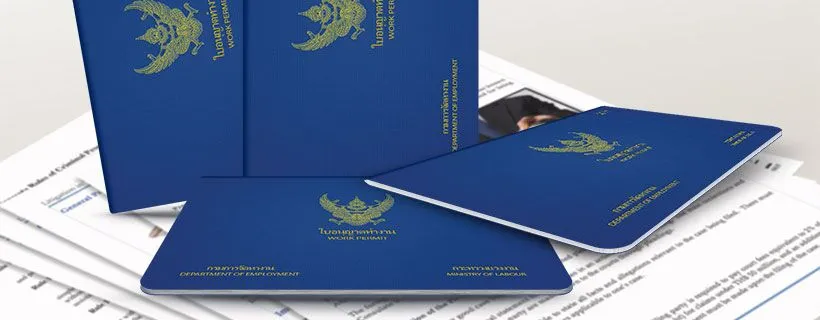
Thai Work Permit
For foreigners seeking employment in Thailand, obtaining a Thai work permit is a legal requirement. Regardless of the type of work—whether professional, technical, managerial, or even volunteer-based—foreign nationals must secure proper authorization before engaging in any form of employment within the country.
Thailand maintains strict labor and immigration controls to regulate foreign participation in its workforce. These controls are designed to protect local employment opportunities while allowing businesses to benefit from foreign expertise. As a result, the process of obtaining and maintaining a work permit involves multiple legal requirements, coordination with employers, and ongoing compliance obligations.
This article provides a comprehensive and in-depth overview of Thai work permits, including legal foundations, eligibility requirements, application procedures, employer obligations, restrictions, and common challenges.
Legal Framework
Work permits in Thailand are governed by:
- Foreign Workers Employment Act
- Immigration Act
These laws regulate:
- who may work in Thailand
- types of permissible employment
- employer responsibilities
- penalties for non-compliance
A work permit is tied to both the employer and the specific job role, meaning foreigners cannot freely change jobs without updating or reapplying.
What Is a Thai Work Permit?
A work permit is an official document issued by the Ministry of Labour that authorizes a foreign national to work legally in Thailand.
Key Features
- specifies the job position
- identifies the employer
- defines the work location
- limits the scope of permitted activities
Working outside the scope of the permit is considered illegal.
Who Needs a Work Permit?
Any foreigner engaging in work in Thailand must obtain a work permit.
Definition of “Work”
Thai law broadly defines work as:
- physical or mental activity
- whether paid or unpaid
This means even volunteer work or informal assistance may require authorization.
Eligibility Requirements
To qualify for a work permit, both the employee and employer must meet specific conditions.
For the Foreign Employee
- must have a valid Non-Immigrant visa (typically Non-B visa)
- must possess relevant qualifications or experience
- must not be engaged in prohibited occupations
For the Employer
The employer must meet financial and operational requirements.
Typical Requirements
- registered company in Thailand
- minimum capital requirements (often 2 million THB per foreign employee)
- appropriate business licenses
- compliance with Thai labor laws
Restricted Occupations
Thailand reserves certain jobs for Thai nationals.
Examples of Restricted Jobs
- manual labor
- retail sales (in many cases)
- certain service roles
- agriculture
Foreigners must ensure their job is not on the restricted list.
Application Process
Step 1: Secure a Non-Immigrant Visa
Applicants must first obtain a Non-Immigrant visa, usually from a Thai embassy or consulate.
Step 2: Prepare Documentation
Required documents typically include:
- passport
- visa
- educational certificates
- employment contract
- company registration documents
- medical certificate
Step 3: Submit Application
Applications are submitted to the Ministry of Labour.
Step 4: Approval and Issuance
Once approved:
- the work permit is issued
- the employee can legally begin working
Processing Time
Processing times vary but generally range from:
- a few days to several weeks
Work Permit Conditions
Work permits are highly specific.
Key Restrictions
- limited to a specific employer
- limited to a specific job role
- limited to a specific location
Any changes require official approval.
Changing Jobs or Employers
If a foreigner changes employment:
- the existing work permit must be canceled
- a new application must be submitted
Failure to update the permit can result in penalties.
Renewal of Work Permit
Work permits are typically issued for:
- 1 year (aligned with visa validity)
Renewal Requirements
- continued employment
- updated documentation
- compliance with all regulations
Employer Responsibilities
Employers play a critical role in maintaining compliance.
Key Obligations
- ensure employee has a valid work permit
- report employment changes
- maintain company compliance
- assist with visa and permit renewals
Employee Responsibilities
Foreign workers must:
- carry their work permit
- perform only authorized duties
- comply with visa conditions
- report changes in employment status
Penalties for Non-Compliance
Violating work permit laws can result in:
For Employees
- fines
- imprisonment
- deportation
- blacklisting
For Employers
- fines
- business penalties
- suspension of operations
Special Cases
Board of Investment (BOI) Companies
Companies promoted by the Board of Investment may receive:
- simplified work permit procedures
- reduced restrictions
- faster processing
Short-Term Work Permits
Temporary work permits may be issued for:
- short-term assignments
- urgent business activities
Digital Work Permit (Smart Visa)
Thailand has introduced alternative systems for certain professionals, allowing:
- combined visa and work authorization
- fewer administrative requirements
Common Challenges
1. Complex Documentation
Incomplete paperwork can delay approval.
2. Changing Regulations
Immigration and labor rules may change.
3. Employer Compliance Issues
Non-compliant companies may affect employee applications.
4. Misunderstanding Work Scope
Performing unauthorized tasks can lead to violations.
Best Practices
To ensure compliance:
- secure the correct visa before applying
- verify job eligibility
- maintain complete documentation
- update permits when changing roles
- work with experienced legal professionals
Advantages of a Thai Work Permit
- legal authorization to work
- access to employment opportunities
- ability to stay long-term
- compliance with Thai law
Limitations
- restricted job roles
- dependency on employer
- administrative requirements
- need for renewals
Conclusion
A Thai work permit is an essential legal requirement for foreigners seeking employment in Thailand. Governed by the Foreign Workers Employment Act and immigration regulations, the system ensures that foreign labor is properly regulated and aligned with national interests.
While the process involves multiple steps and strict requirements, it provides a clear pathway for legal employment. Both employers and employees must understand their responsibilities to maintain compliance and avoid penalties.
With proper preparation, documentation, and adherence to legal requirements, obtaining a Thai work permit can open the door to professional opportunities and long-term residence in Thailand.